

Hummus beyond borders
The regional dish with a Lebanese soul, plus two recipes by Lina Saad


I’ve become a little bit obsessed with hummus/humus/houmous. Perhaps a sweeping generalisation, but it’s pretty standard fare in many parts of the country – the ONS added it to the basket of goods it uses to calculate inflation last month. Apparently, the hummus market was worth about £170 million in 2024.
As part of our Summer Taste Tests at Good Food, I blind-tasted a series of own-brand versions, and they were either quite bland (I think because salt has been quite rightly pared back in so many products now) or had a load of toppings added that turned the flavour away from hummus to whatever was on top (not always good in itself). Only a couple of them really tasted of chickpeas, and only one had the benefit of an olive oil addition with good flavour as well. There is much good hummus available from independent brands, whether you like yours smooth or more textured, but there’s nothing like making it yourself if you have time.
All That’s Lebanese suggested this post to me, and it’s very timely as she will explain. Bear in mind that if you own a very efficient blender and you err on the side of a chunkier hummus, you will have to keep an eye on proceedings – or mash some chickpeas to stir in later. Lina likes it smooth, the Lebanese way.
Also, just FYI, we grow chickpeas in Britain now, available from Hodmedods.
Over to Lina…
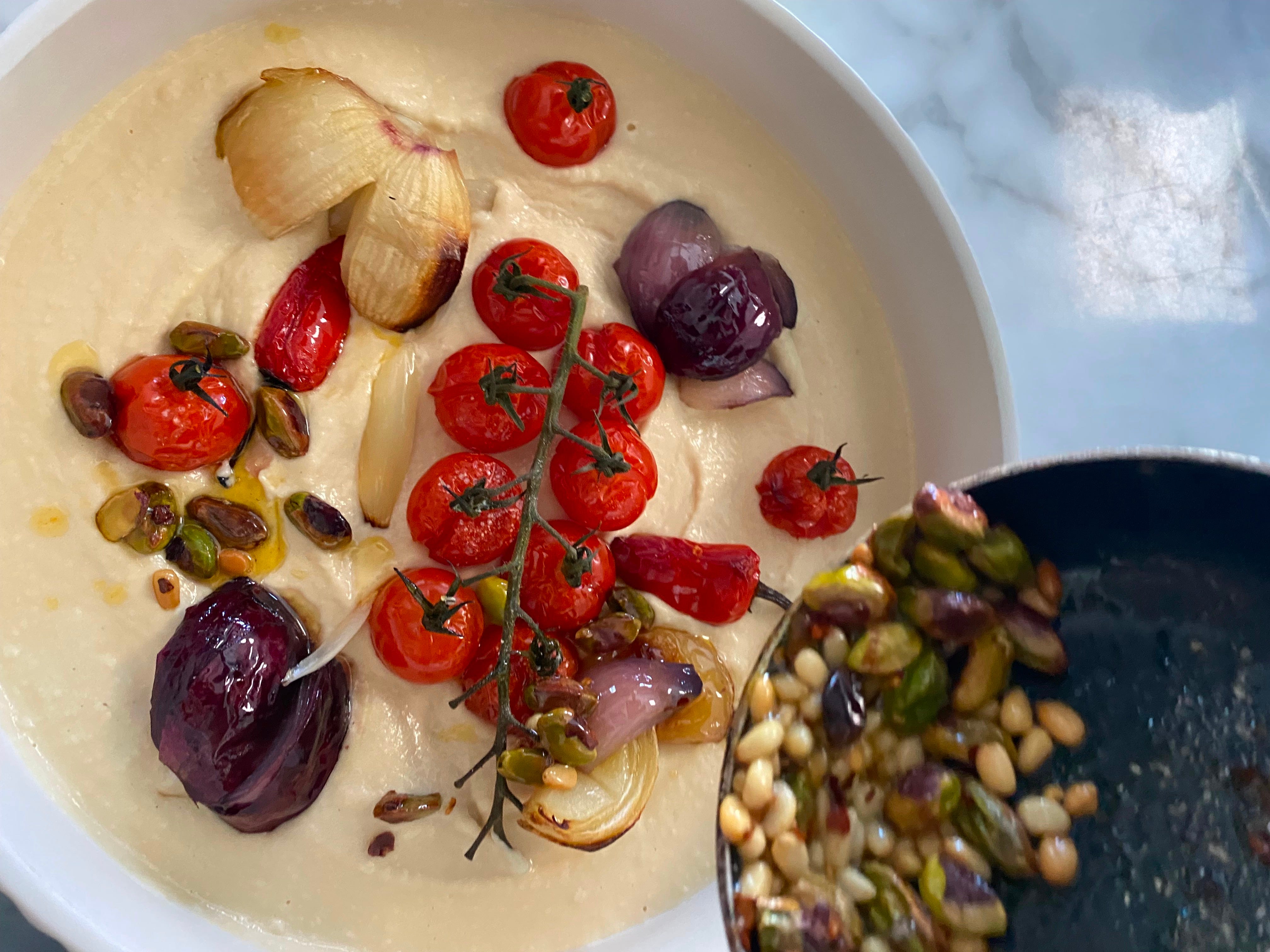
Every year on 13 May, International Hummus Day celebrates one of the world’s most loved and widely travelled dishes.
Across the Middle East, hummus takes many forms. In Jordan, it may be thicker and topped simply with olive oil and whole chickpeas; in Palestine, it is often served warm and generously spooned with olive oil; in Turkey, it may be enriched with butter, cumin and pine nuts; in Syria, it is silky and delicately balanced. The ingredients remain familiar: chickpeas, tahini, lemon and salt, yet every region gives hummus its own expression.
The Lebanese version is especially known for its bright lemony flavour, the gentle warmth of garlic, and silky-smooth texture that feels almost cloud-like. It has a freshness and vibrancy that makes it instantly recognisable, turning the simplest ingredients into something memorable.
In Lebanon, hummus is far more than a dip. It is a staple of everyday meals, a cornerstone of the mezze table, and a dish that brings balance and comfort to the food around it.
One of my earliest food memories is being sent by my grandfather to the local fawal, the neighbourhood bean café or shop, to collect a fresh plate of hummus for lunch. The chickpeas would still be warm, the hummus silky and soft, crowned with olive oil, whole chickpeas and a garnish of finely chopped parsley and radish. I would carry it home knowing it would sit beside grilled kafta, lamb cubes, warm bread and salad.
The oval plate of hummus was never treated as a dip; it completed the meal.
Its creaminess balanced the smoky grilled meat, its freshness lifted the richness, and its softness invited everyone to gather around and share. That is what hummus means in Lebanese kitchens: generosity, warmth and a sense of abundance.
That generosity is reflected in the way Lebanese hummus is made. There is the unforgotten scene of Mr Shawki pounding the warm chickpeas with a large wooden pestle, adding fresh lemon juice and tahini and salt, then finishing generously with olive oil. The result was, is, creamy yet bright, rich yet light.
As hummus has travelled around the world, it has evolved into countless variations – beetroot hummus, avocado hummus, caramelised onion hummus – many of them colourful and inventive. Yet these adaptations often shift attention away from what makes hummus special: the silky warmth of the chickpea itself.
Traditional hummus has always welcomed variation, but usually through toppings rather than transformation. Across the region, it may be finished with warm chickpeas, paprika, spiced meat or toasted nuts. These additions build on the hummus rather than changing its identity.
That is the beauty of hummus: it is simple, generous and endlessly versatile.
It can accompany kebabs, anchor a mezze spread, or become the centrepiece of a meal when topped with roasted vegetables or fragrant spiced meat. It adapts beautifully yet remains true to itself.
Perhaps that is why hummus has travelled so far and become so widely loved. Yet for all its regional variations, Lebanese hummus remains especially prized for its brightness, its silkiness and the balance of lemon, garlic and tahini that gives it such character.
On International Hummus Day, that is what deserves celebrating: not endless reinvention, but the craft behind making hummus beautifully. This is because when hummus is made with warm chickpeas, good tahini, fresh lemon and a generous hand, it becomes far more than a side dish. Hummus becomes the heart of the table.
Lebanese hummus with sujuk-spiced lamb
This version turns hummus into a luxurious main dish, topped with warm spiced lamb inspired by the flavours of sujuk.
Serves 4
Prep 10 mins
Cook 30 mins
For the hummus
1 400g jars chickpeas, drained
2 large garlic cloves
2 lemons, juiced
55ml tahini
30ml vegetable oil
For the lamb topping
300g minced lamb
1 tbsp vinegar
1 tsp paprika
½ tsp ground ginger
1 tsp cumin
1 tsp ground coriander
½ tsp crushed fennel seeds
1 tbsp olive oil
For garnish
2 tbsp toasted pine nuts
2 tbsp pistachios
pinch of paprika
olive oil, for drizzling
1. Prepare the hummus as in the recipe above, blending the warm chickpeas with garlic, lemon juice, tahini, vegetable oil, and salt until silky smooth.
2. Mix the minced lamb with the vinegar, paprika, ginger, cumin, coriander, fennel, salt and pepper. At this stage, you can either shape the mixture into small meatballs or leave it loose, depending on your preference.
3. Heat the olive oil in a frying pan and cook the lamb until browned and fragrant.
4. Spoon the hummus onto a platter and top with the hot spiced lamb.
5. Garnish with the toasted pine nuts, pistachios, paprika and olive oil. Serve with warm pittas.
A timely reminder…
Keith of cheese fame is doing an AMA on Reddit tomorrow about, you guessed it, cheese.
 | A guest post by
|
Amazing article by Lina as always
We love hummus in our house. I must admit I also love the variations with peas, sweet potato and beetroot. Especially the later with lots of cumin like I had at Duck Soup in SoHo once upon a time. I’m also intrigued about the vegetable oil other than olive oil. I’ll have to give that a go next time we make it.