

Strawberry fields forever
In a tale of national obsession, Cheryl Cohen, director of London Farmers Markets, explores the world of strawberries


There’s irony in the title of this post: ‘fields’ of strawberries no longer look as they once did, as this week’s guest writer Cheryl Queen of Markets will explain. And yes, I know the Beatles song is not about actual strawberry fields. Over to Cheryl.
At school (a while back), our English teacher illustrated the use of the word ‘delicacy’ by describing how bringing home strawberries to his children was an indulgence. Strawberries, he announced, are a delicacy. This rare or expensive food item that was considered a luxury or a treat is now a summer staple, grown year-round even in the UK. Despite this, strawberries continue to hold a special allure to evoke a hoped-for sunny summer. Their seasonal appearance once coincided with the start of Wimbledon; strawberries and cream have been served there since the first tournament in 1877.
In the beginning…
According to the RHS, the strawberry we know, Fragaria × ananassa, began life as Fragaria virginiana (a sweeter version of our tiny wild strawberry, from eastern North America) combined with the beach strawberry Fragaria chiloensis (much larger but blander, from the western coast of America) in a chance cross that occurred in France. Although the name origin ‘straw berry’ is uncertain, it has nothing to do with straw and is more likely to mean strewn, possibly referring to the tiny achenes that cover the fruit. As a member of the rose family, strawberries are not actually berries. The flesh grows from the receptacle that holds them, whereas a true berry is produced from the ovary of a single flower. I love the Old English name, eorðberge, ‘earth-berry’.
The RHS remarks that ‘strawberries have been a popular fruit since the days of Henry VIII, when, in 1509, Thomas Wolsey is said to have introduced strawberries and cream as a dessert. Their popularity soared in 19th-century London when, for a few heady weeks of the summer, the juicy berries were sought after by the wealthy. Before the days of refrigeration, eating berries in public was a sign of prosperity.’


Now…
Strawberries grown organically in the soil, with straw to protect them, are a rare sight now. A small percentage of organic strawberries continue to be soil-grown. Tabletop growing (allowing for better control of predators, elimination of soil-borne diseases, increased yields, an extended growing season and improved picking efficiency) accounts for over 85% of the strawberries grown in the UK and Ireland, and innovation, such as the Dyson Farming method, is coming into play. In the Netherlands and Belgium, hydroponic systems dominate the industry, while industrial systems in Spain under plastic tunnels use soil, and Poland still uses an open field system.
Growing conditions have changed over the years, but so have the varieties, the length of time it takes for the fruit to reach us, and how they’re stored and kept. Strawberries should have a sweet aroma that’s echoed in the taste, in a gently yielding bite that’s juicy and fragrant. The modern strawberry is a result of supermarket supply chains that need fruit to look good on the shelf. Commercial berries must survive exacting temperature-controlled logistics; they are born to be tough little survivors.
An heirloom, organic or wild strawberry is ripe all the way through, incredibly sweet, and completely soft. If you put a pallet of these on a bumpy English road (or a truck from Spain), the weight of the top berries would crush the bottom ones into jam. To fix this, agricultural breeders selected varieties with a dense, more fibrous central core. This acts like a structural column or a built-in shock absorber. It keeps the strawberry rigid during packing and shipping.
Strawberries ripen from the outside in, triggered by sunlight and warmth. The skin and outer flesh turn deep red first because they are exposed to the sun and produce anthocyanins (the pigments that make berries red). However, there are some varieties that are naturally a pale red, even white, so don’t always judge a strawberry by its colour. The core is the very last part of the strawberry to mature, develop sugars and turn red. Because supermarkets prioritise shelf-life, commercial growers often harvest the berries the exact moment the outside turns completely red, even if the inner core hasn’t caught up yet. Strawberries stop ripening the moment they are pulled from the plant. They are then blasted to 2°C within a couple of hours of being picked. Once their temperature drops, the chemical ripening process completely halts. If the core was white and hard when it was picked on the farm, it will stay as it is all the way to your kitchen table. If you find berries marketed as ‘the best’ or ‘finest’ or with similar words that imply a better class of fruit, the chances are they might have been picked later and, therefore, will be riper throughout.
During the British summer, the goal for supermarkets is from field to shelf in 24 to 36 hours. In the UK, pickers start early when the morning air is cool. Strawberries are hand-picked directly into their retail punnets to minimise handling. Within one to two hours of being picked, they are moved to the farm’s on-site cold store to drop their ‘field heat’ down to about 10°C. The punnets go through a forced-air blast chiller, rapidly dropping the fruit’s core temperature to 2°C. Every hour a berry stays warm shortens its shelf life. The punnets are checked for quality, barcoded, then stacked onto pallets. Refrigerated trucks (maintained strictly between 0°C and 2°C) pick up the pallets from the farm and drive them to the supermarket’s Regional Distribution Centre (RDC). Eighteen to 24 hours after being picked, the pallets are cross-docked (unloaded and immediately sorted onto store-specific delivery trucks) without ever leaving the chilled environment. Trucks depart on overnight routes to local supermarkets and arrive 24-36 hours after picking.
We also rely heavily on farms in places outside the UK, such as Huelva, in Spain. Because of the more than 1,000-mile distance, the timeline stretches to three to four days, relying on a highly optimised continuous cold chain and non-stop travel through Spain and France.

The Wimbledon effect
During Wimbledon fortnight, British shoppers buy roughly 9,500 tonnes (about 19 million punnets) of strawberries, accounting for about 15% of the entire summer season’s berry sales. At supermarkets like Waitrose, strawberry sales can rocket by 140% to over 400% in a single week.
Because strawberries cannot be stored or frozen without destroying their texture, supermarkets cannot simply stockpile them in warehouses ahead of peak demand. Relying on farm relationships and specialised demand-planning software, they can adjust ordering volumes day by day. If the forecast predicts a sunny Wimbledon weekend, supermarkets will automatically scale up their daily strawberry orders from farms by 30% to 50%. If it rains, demand drops sharply. Retail buyers actively track the tournament bracket. Historically, when a high-profile British or favourite tennis player progresses to the quarter- or semi-finals, supermarket strawberry sales experience an extra 20% surge on the days they play. Logistics teams actively look at the match schedule to push extra stock to stores the night before a big match.
Because supermarkets need millions more punnets than usual, they work hand-in-hand with commercial growers to manage the natural ‘flushes’ (when a massive wave of fruit ripens all at once due to a sudden heatwave). If a pre-Wimbledon heatwave causes strawberries to ripen faster than planned, supermarkets will quickly step in to buy up the surplus. For example, Tesco frequently buys up hundreds of tonnes of unexpected ‘bumper crops’ right before the tournament, repackaging them into larger 1 kg plastic boxes at a discount to prevent farm waste and feed the Wimbledon rush.
An unpredictable cold snap or heatwave creating a national strawberry shortage during the tournament means that supply chain models pivot to prioritisation. Long-term supermarket contract growers will prioritise their committed supermarket clients over the open wholesale market to ensure grocery shelves stay full.
A strawberry is rarely bought alone during Wimbledon season. Supermarket supply chains treat strawberries, clotted cream, single cream and Pimm’s as a singular unit on sale; that’s why you see them grouped together. Dairy logistics are scaled up in synchronicity with the strawberry harvest.
Wimbledon itself relies on a hyper-local, isolated supply chain. All of the official strawberries eaten on-court – about 34 tonnes – are grown just 30 miles away at Hugh Lowe Farms in Kent. Pickers start at 5:00 AM every morning so the berries can be driven directly to the court and eaten by spectators the same day. Hugh Lowe Farms supplies supermarkets, too; look out for the name of the farm owner, Marion Regan. They won’t be as freshly picked, but if you can’t get to Wimbledon, it’s the closest way to taste the fruit sold there.
How we grow in the UK: 3 farms, 3 different systems
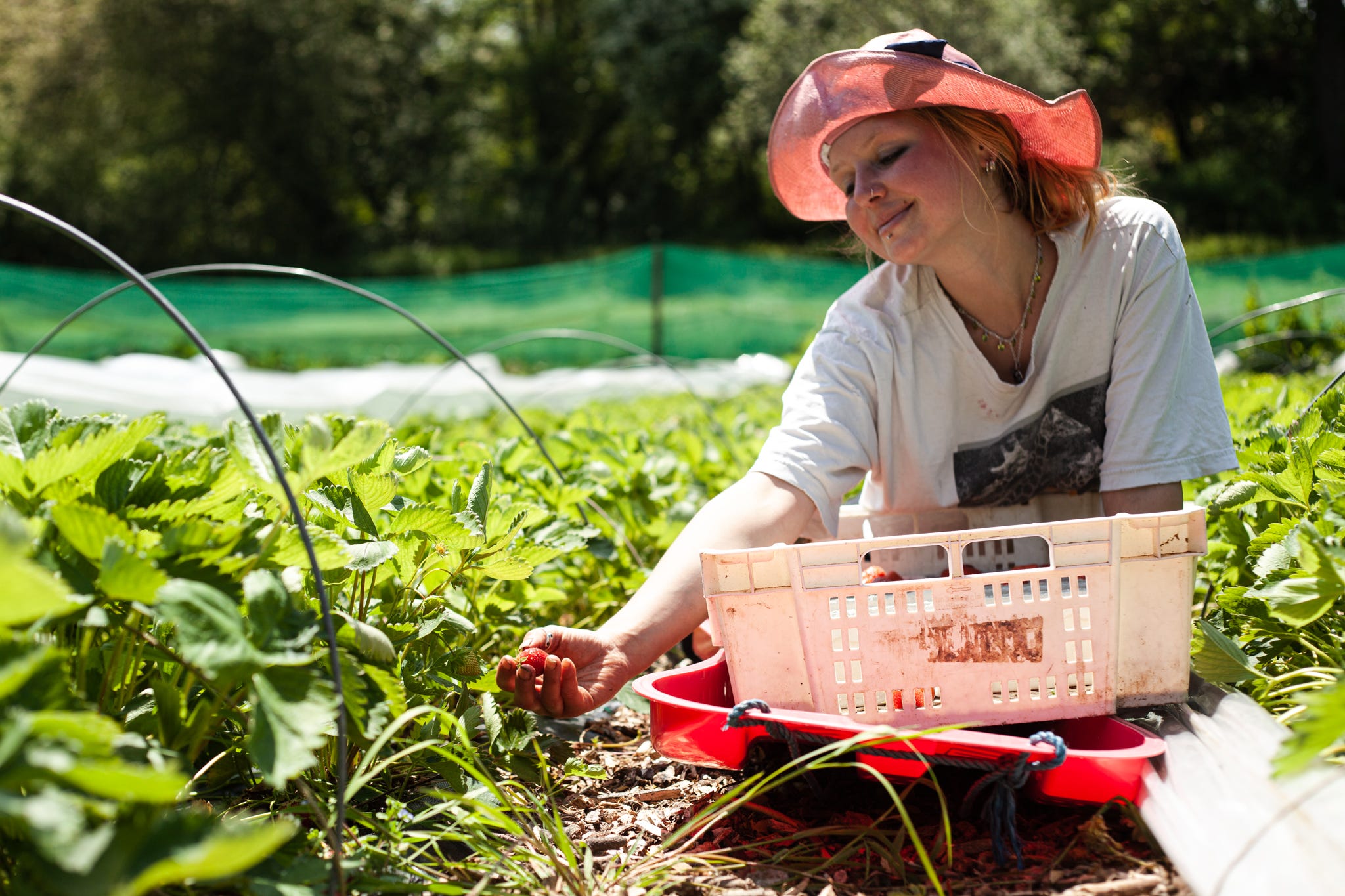
Organic, soil-grown strawberries
One of the oldest organic farms in the UK, Tollhurst Organic Farm was founded in 1976 by Iain Tolhurst. After beginning farming life in Cornwall, they moved to South Oxfordshire and the Hardwick estate to grow and sell strawberry runners. Currently with 17 acres, their strawberries are grown in three different microclimates: in their open-air market garden, in tunnels and under cloches – always in soil. Because the farm has inherited soil-borne disease (one year, their whole crop was lost overnight), they choose less susceptible varieties and rotate them every three years. Christine, the variety tasted (see below), is a paler red than the standard bright red berry, aromatic and soft with a pleasing sweetness, balanced tartness and a soft core. They would like to reintroduce the strawberry they began with, the beautifully flavoured Cambridge Favourite. Ian Tolhurst (Tolly) tells me Royal Sovereign, est. 1884 was the most common strawberry to be grown in Europe at one time. At the peak of its popularity between 1920 and 1960, they were on the menu for Queen Elizabeth II’s coronation banquet. Because this variety developed major virus problems, it became non-viable, and it’s still not commercial on a large scale due to low yields, ‘but we’re going to give it a go. It’s difficult to grow because of the virus, and it doesn’t like damp.’
Tamara, head of business development, understands why so many farms turn to tabletop growing. It’s cheaper, with no back pain (while picking), but Tolhurst isn’t trying to compete. Business-wise, ‘we pitch to a different audience’. They’re a small business, and their image is the backbone of the Soil Association; Tolhurst was one of the first licensees. On the day I visited, Tamara dropped crates of strawberries off at a local organic shop. ‘We pitch to whoever likes to buy local and organic. Strawberries are one of the most sprayed crops,’ she adds. What worries them most? ‘If the organic movement allows hydroponics to be certified, and there’s big pressure to do so. If that happened, we would be finished. It’s against the spirit of everything we believe in.’
Tamara shows me the fields, tunnels and strawberries flourishing in the ground, and she’s happy the weather has been cooler. Constant heat means non-stop picking. The weather also affects pollination, quality and shape. If insects aren’t out in force because the weather is cooler, it affects the fruit. ‘An odd-shaped, bumpy strawberry is a fruit that’s formed without being pollinated; it will still taste the same.’ She tells me, ‘Strawberries gain flavour a day after picking. Never keep them in the fridge. Just like tomatoes, they lose flavour. Keep them out and eat within 24 hours.’ In the future, they’ll be increasing their crop, but ‘never tabletop; soil is our pride.’
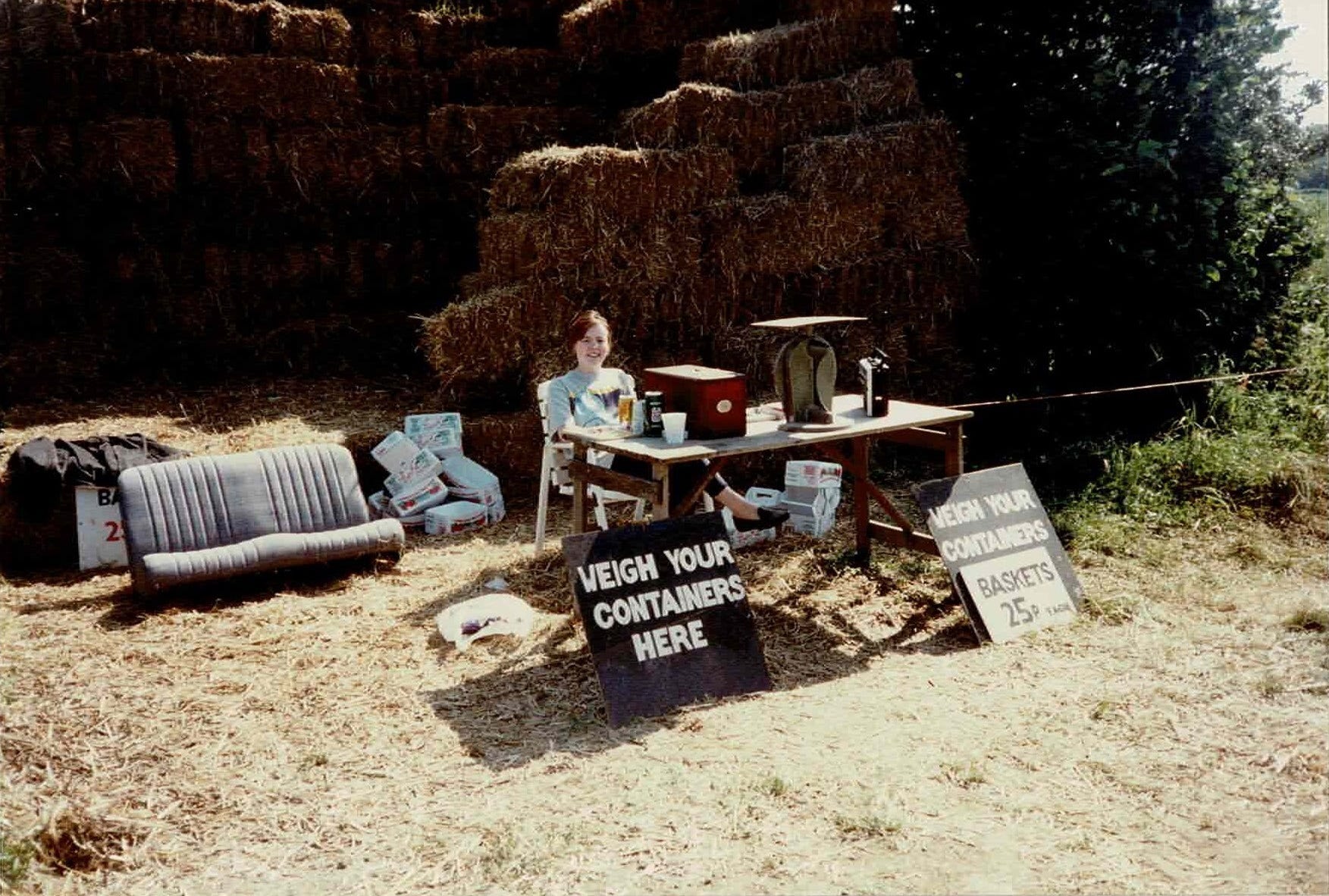
PYO & seasonal
Cammas Hall Farm is one of the oldest pick-your-own farms in the UK. Dating back to 1966, it grows across 41½ acres, producing 40 tonnes of PYO. In the 1970s, with dogged determination, it supplied supermarkets and wholesalers. Now having given that up, the owners grow a range of soft fruits and supply weddings, farm shops, and farmers’ markets during the strawberry season (seasonality is important to them). Varieties have improved, owner Jonathan tells me. In the 1970s, it was Cambridge Favourite, USA-bred Totum, that ‘froze well’; then ‘everyone moved to Elsanta and Sonata, which are disease resistant, higher yield and better flavoured. Flavour is key.’ What’s his favourite? ‘Early Sonata. They grow half in tunnels, half outside.’ What makes a flavour difference? ‘Sunshine,’ but he adds, ‘force them too much, and they’ll grow quicker and have less flavour.’ And yet the strawberries we get from warmer countries don’t necessarily taste better. In 2014, they brought in tabletop at a make-or-break time for the farm. It was a gamble and an investment. ‘I’m glad we did it. It was a scary time, but sales increased.’
Jonathan travelled to farms in Hereford and Kent to see how others had adopted the technique (to get away from soil-borne diseases and weeds). He uses a mix of peat from Ireland and 30% wood fibre, and yes, he’s aware of the peat problem. There are trials in place with compost, but right now, ‘It’s an inconsistent product.’ He keeps the peat for three years, and all substrates are returned to the land. No herbicides or insecticides are employed, but he does use ‘the odd fungicide against mildew’, adding, ‘We do not waste anything. What we don’t sell all goes into our ice cream, lollies, smoothies and jams. If we have a massive glut, we have 17 freezers.’
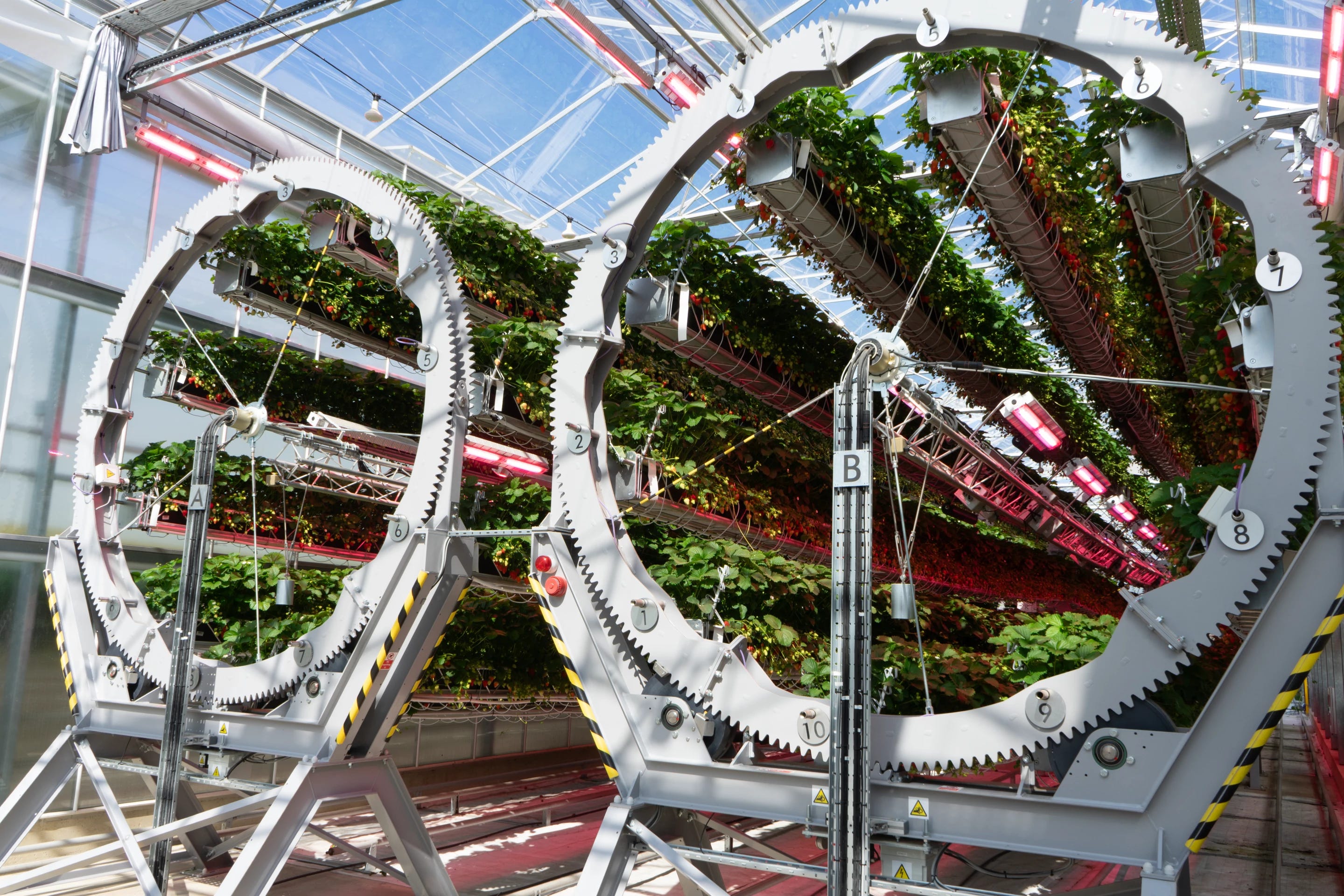
Dyson Farming System
Dyson has completely revolutionised the way that strawberries are grown with their hybrid vertical growing system: they grow year-round, but they weren’t the first. The Summer Berry Company in West Sussex began growing the fruit year-round in 2024. Dyson Farming has 23 acres of glasshouses in Lincolnshire, producing 1,250 tonnes of strawberries every year, year-round. I asked Dan Cross, managing director, why we need strawberries year-round. ‘Strawberries are a favourite in Britain, so demand stays high even when they’re out of season here. To meet this demand, the UK imports them from faraway places like Morocco and Egypt. This comes with a big carbon footprint due to the associated air miles. With the right technology, we can instead produce high-quality and sustainable strawberries all year round, improving our food security in the UK. Nearly half of our food is imported, and we should grow more here.’
Do the flavour profile/sugar levels of the berries change out of the summer months? ‘By using renewable energy, robotics and automation inside our state-of-the-art glasshouses, we’ve been able to create the optimum growing conditions to produce premium strawberries year-round. This means we can deliver the same sweetness and ripeness that consumers would expect to have in summer all through the winter months.’

So, do strawberries really taste that different?
We know they do. We’ve all remarked on a ‘really good’ strawberry when we’ve bitten into it.
Bevington Salads hosted a tasting at New Covent Garden Market for me. Hugh Lowe’s Wimbledon berries were included amongst the varieties. I asked the judges to consider appearance, aroma, texture, taste/flavour, sweetness and finish (i.e., does the flavour have a long finish?) and mark each category out of 10. I’d asked that the berries be taken out of the chiller before tasting. They were, in no particular order:
1. Agri Fruit Somerset. Florice, an early English variety
2. Hugh Lowe; Malling Ace
3. Fruitway Farm Oxford, Morning Allure
4. Belgium, Hoogstraten, glass grown year-round: Sonsation
5. Mockbeggar Farm Kent. Malling Centenary
6. Tolhurst Organic Farm, Pangbourne, Christine. Soil-grown.
There were two joint winners. Everyone voted differently. It’s impossible to do a like-for-like strawberry tasting across varieties. I was more curious than anything to see how tastes compared. I will say that three out of five of us gave top marks to number 6, the only organic berry in the bunch. ‘You’re biased,’ Gary from Bevington told me. And honestly, no, I’m not. I voted on taste, texture and flavour. Tolhurst were delighted when I told them.
My colleagues at London Farmers Markets (BTW I’m an ex-director of LFM) say their favourite varieties this year are Flair, Allegro, Malling Centenary, Eve’s Delight and Eve’s Joy.
Another of the strawberries I tasted that was both soft and sweet was Zara. Strawberry breeder (great job title), Sarah Palmer, from Driscolls, told me:
“Zara was developed through Driscoll’s breeding programme with flavour at its heart and is grown in the UK in partnership with Place UK. Rather than being picked later than other varieties, Zara is naturally bred to deliver exceptional sweetness and a balanced flavour profile when harvested at the optimal point of ripeness. Like all strawberries, variations in internal colour are a natural characteristic of the fruit and can differ between varieties. While consumers often associate deeper red flesh with sweetness, internal colour is not necessarily an indicator of flavour. What matters most is the eating experience. ”
Have you got any favourite varieties?
If you can, buy fruit that’s been picked the same day and taken directly to market. Whatever you choose, ask questions, taste before you buy if you’re able to, and try leaving your fruit at room temperature to see what difference it makes for the flavour.
Saturday’s bonus post will be strawberry recipes!
 | A guest post by
|
This is a brilliant article Cheryl. So informative so much I didn’t know about the strawberry growing world. Thank you 🙏
My favourite is Mara de Bois, which tastes like the wild strawberries we picked in the hedgerows on the way to and from school when I was a child. I have only ever found them in French street markets, not in the UK (though maybe they are available in the big London markets and those greengrocery shops there that spill out over the pavement).
I tried to grow them one year, from plants bought online. Not very successful, very low yield and the inevitable slug and bird attack. The few that made it were delicious, though!